
SYMAP® ARC is a modular arc-flash protection system designed for low- and medium-voltage switchgear.
The system detects an arc caused by a short circuit through optical light sensors in under 1 ms with optional
current measurement as a second criterion, and activates fast binary tripping outputs with a
≤ 2 ms tripping time. With an external quenching device (ARC-IGN-A), total arc extinguishing time can be below 2 ms (depending on the selected quenching device),
dramatically reducing the energy released into the switchboard during the fault.
The system is delivered as a set of DIN-rail modules in a stainless steel housing designed for robust operation in demanding EMC environments. It scales from a stand-alone SIMPLE system covering a single panel, through an EXTENDED system with current criteria and parameter tool, up to a COMPLEX multi-master network protecting whole installations with full zone selectivity.
Made in Germany. All SYMAP® ARC modules are developed and manufactured by Stucke Elektronik GmbH in Hamburg.
SYMAP® ARC is DNV Type Approved (Certificate TAE000040X), for installation in switchboards and cabinets on DNV-classed vessels.
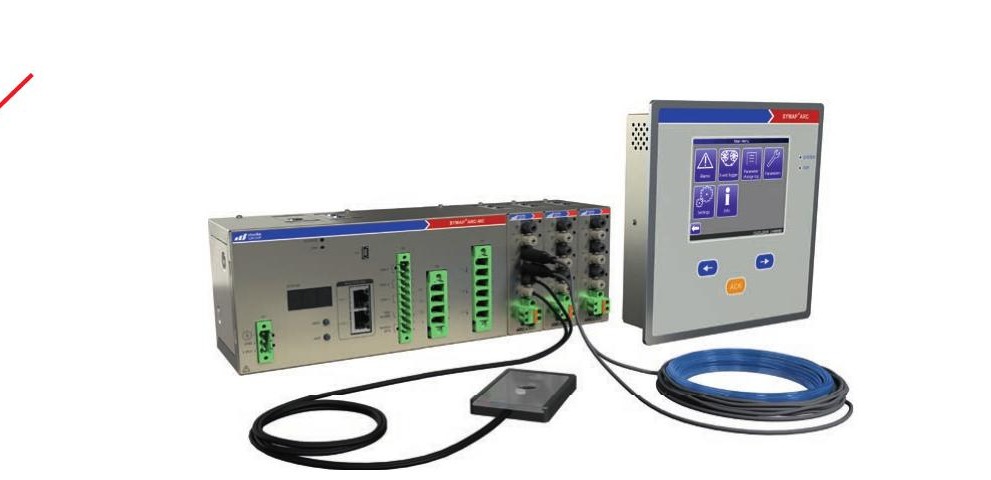
Complete SYMAP® ARC system, master module + HMI + ignition module + light sensors
Arc detection light sensors recognise the bright flash of a short-circuit arc immediately
Arc extinction trip command issued and quenching device activated, well before the fault energy peaks
The energy released into a medium voltage switchboard during an arc fault rises faster than linearly with time. Every millisecond an arc is allowed to burn means more equipment damage, longer downtime and greater risk to operating personnel. SYMAP® ARC detects the arc with optical sensors in less than 1 ms, and its fast binary trip outputs react within 2 ms. In configurations without a quenching device, total fault clearing time also depends on the circuit breaker opening time.
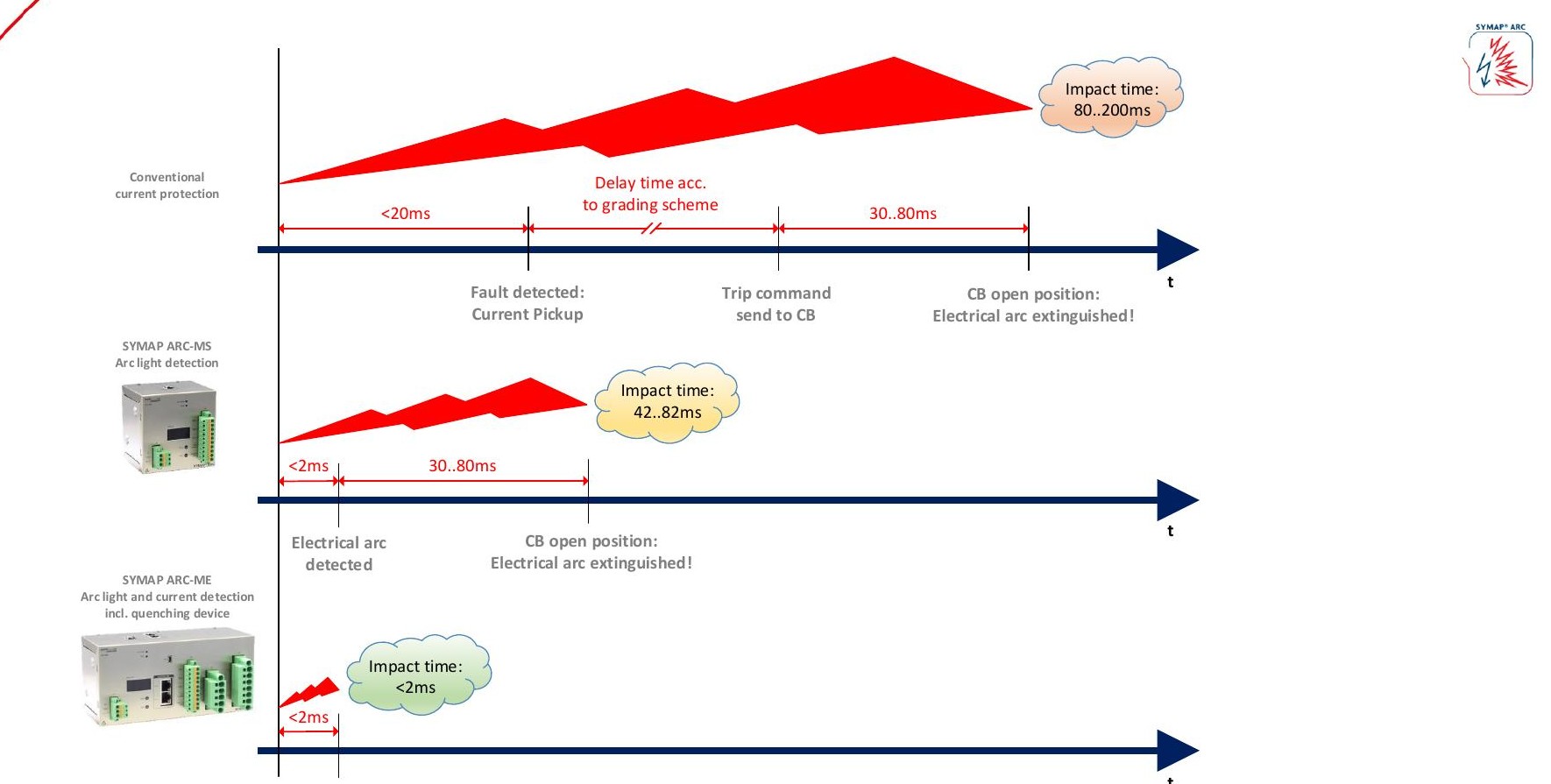
Current protection only. Time to current pickup (< 20 ms) + grading delay + breaker open time (30, 80 ms). The arc burns the entire time.
Light detection + circuit breaker. Arc detected in < 1 ms, trip command issued immediately, breaker opens in 30, 80 ms.
Light + current + external quenching device. Arc detected in < 1 ms. With an external quenching device, activated via the ARC-IGN-A module, the arc is extinguished before the fault energy peaks.
A circuit breaker takes 30, 80 ms to open after receiving the trip command, that is unchangeable physics. In the EXTENDED configuration, SYMAP® ARC can use the ARC-IGN-A module to operate an external quenching device (primary short-circuiter) for very fast arc extinction. The quenching device is a separate, external element that SYMAP® ARC operates; the system itself detects the arc in less than 1 ms and issues the trip command within 2 ms.
According to the National Fire Protection Association (NFPA) an arc flash is:
a dangerous condition associated with the release of energy caused by an electrical arc, as part of an arc fault, a type of electrical explosion or discharge that results from a low-impedance connection through air to ground or another voltage phase in an electrical system.
Arc fault errors are the most powerful faults that can occur in electrical installations. Despite serious precautionary measures taken in advance, these faults still happen, in any installation, regardless of age:
The most common cause in installations over 15 years old, insulation breakdown leads to phase-to-phase or phase-to-ground arcing.
Humidity, salt mist, dust contamination and corrosion, especially severe in marine, offshore and industrial environments.
Wrong switching sequence, racking-in errors, dropped tools, misidentified panels, the cause of many serious arc events.
Rodents, lizards, insects entering through vents or cable entries, the cause of a surprising fraction of switchboard fires worldwide.
Electric arcs can cause heavy damage to switchgear and present a serious hazard to operating personnel, including severe injuries and death. Arc flash protection inside electrical cabinets is a key countermeasure once a fault has started.
The master is the central device of an arc protection system. It evaluates inputs from light-sensor modules and issues fast trip commands.
Master Simple trip contacts and INTERLINK bus to light-sensor modules. No parameterization needed; ready after wiring.
Master Extended adds current/voltage measurement, di/dt criterion, optional HMI and quenching device. Configurable via SAPT.
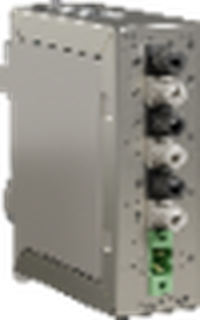
Light detection module connects up to 3 light sensors per module, one fast tripping output. Multiple modules combine on INTERLINK bus.
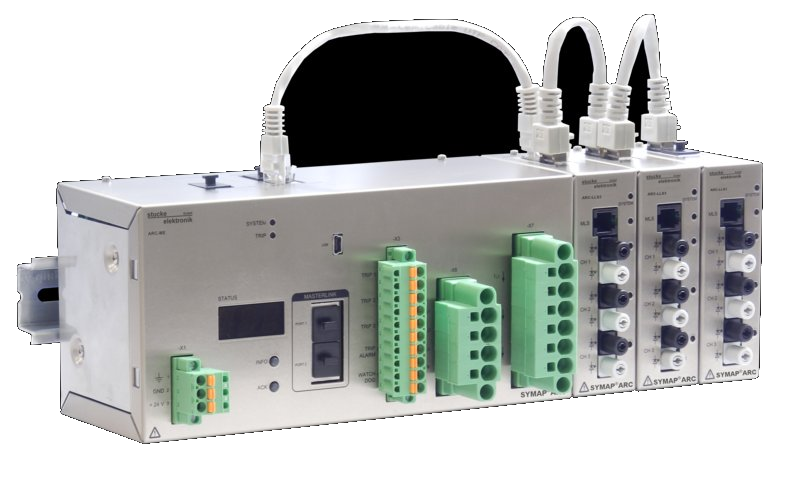
DIN-rail assembly one ARC-ME master with three ARC-LS3T light-detection modules connected on the INTERLINK bus.
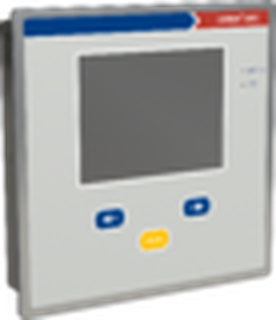
Detached Human-Machine Interface for the EXTENDED arc protection system, status, diagnostics, operator interaction.
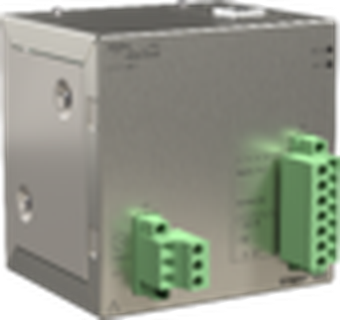
Ignition module with system cable to operate an external quenching device (primary short-circuiter) for very fast arc extinction.
Optical sensors detect the bright light of an arc in real time and report it to the light-detection module via fiber-optic cable.
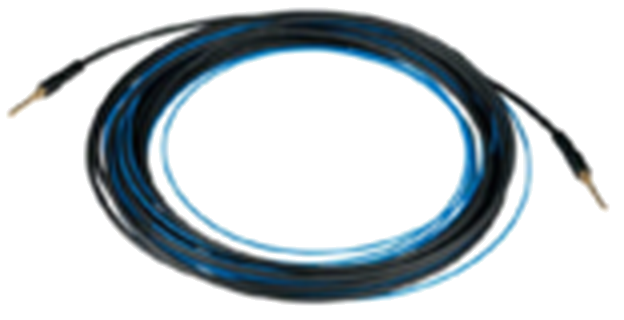
Light Line Sensor lengths 10/15/20/25 m. Active sensing portion is 5 m shorter than total. Ideal for full-length busbar protection.
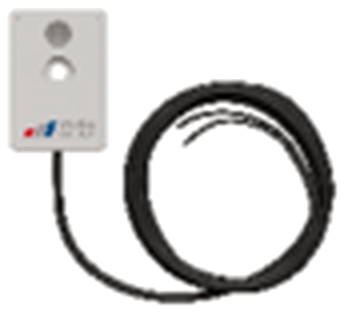
Light Point Sensor lengths 3/5/10 m; intermediate on request. Used to monitor a specific compartment such as a cable termination or breaker chamber.
Every SYMAP® ARC component, with its physical specs and the configuration levels (SIMPLE / EXTENDED / COMPLEX) it belongs to. Use this matrix when sizing a new installation or specifying spare parts.
| Category | Component | Description | Weight & Dimensions | Lvl 1 | Lvl 2 | Lvl 3 |
|---|---|---|---|---|---|---|
| Master modules | ARC-MS | Master Simple module, trip contacts and INTERLINK to connect light detection modules | 0.6 kg 91.4 × 91.4 × 76.2 mm |
✓ | , | , |
| ARC-ME | Master Extended module, trip contact, current measurement, INTERLINK; optional HMI & quenching device | 1.4 kg 193.0 × 91.4 × 76.2 mm |
, | ✓ | ✓ | |
| Light detection modules | ARC-LS3T | Up to 3 light sensors per module + one fast tripping output | 0.3 kg 30.5 × 91.4 × 76.2 mm |
✓ | ✓ | ✓ |
| Optional modules | ARC-HMI | Detached human-machine interface for the EXTENDED arc protection system | 0.8 kg 210 × 210 × 47.8 mm |
, | ✓ | ✓ |
| ARC-IGN-A | Ignition module + system cable to operate external quenching device | 0.5 kg 91.4 × 91.4 × 76.2 mm |
, | ✓ | ✓ | |
| Light sensors | ARC-LLS | Light Line Sensor, for full busbar protection inside a switchboard | 10 / 15 / 20 / 25 m (active sensor part is 5 m less) |
✓ | ✓ | ✓ |
| ARC-LPS | Light Point Sensor, for a specific compartment (cable, breaker, busbar) | up to 10 m 3 / 5 / 10 m standard (intermediate sizes available) |
✓ | ✓ | ✓ |
Lvl 1 = SIMPLE (single panel, no parameters); Lvl 2 = EXTENDED (with current measurement, di/dt, HMI, quenching); Lvl 3 = COMPLEX (multi-zone with up to 8 linked extended systems).
A typical medium-voltage cabinet has three independent compartments, busbar, breaker and cable termination. Each one needs its own light point sensor for selective tripping: when the system trips, you only de-energise the affected compartment, not the whole panel.
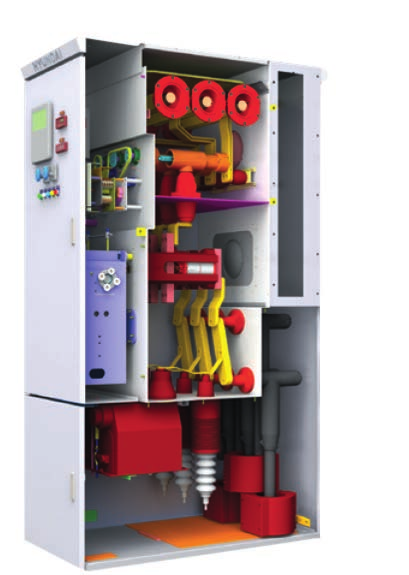
Detects flashover at busbar level, isolates the entire panel from upstream feeders.
Detects faults inside the breaker chamber, common during racking-in or contact wear.
Detects cable termination faults, a common cause of arc events in service. Selective tripping isolates only the faulty feeder, leaving the rest of the panel energised.
For full busbar protection across multiple panels, the ARC-LLS Light Line Sensor can run continuously through the panel cells, replacing point sensors at the busbar level.
SYMAP® ARC scales from a single-panel installation up to a multi-zone, plant-wide protection network.
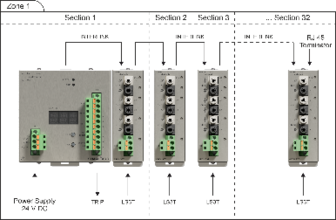
Stand-alone configuration, no parameter setting required.
All features of SIMPLE plus current and voltage criteria. Parameterizable.
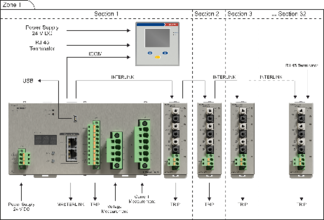
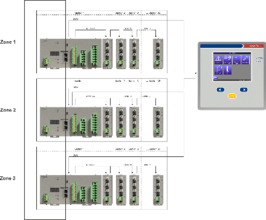
All features of EXTENDED plus inter-master communication and zone selectivity.
A typical multi-zone vessel installation: two zones, each protecting half of the main switchboard, with bus-tie selectivity between them. The trip logic isolates the faulty zone without dropping the healthy one, preserving propulsion or hotel load through a fault.
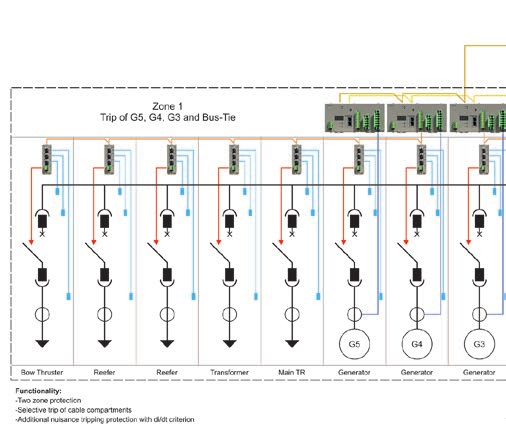
Zone 1 covers bow thruster, reefer feeders, ship's transformer, Main TR and generators G3/G4/G5
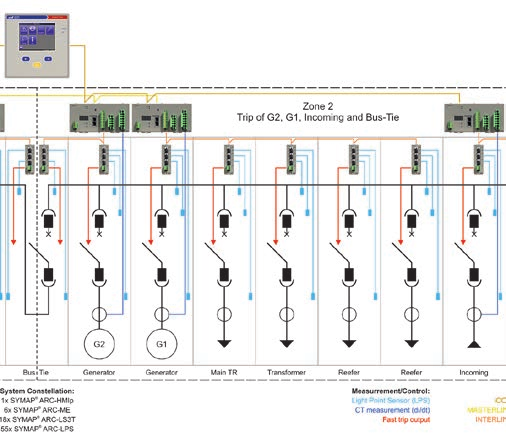
Zone 2 mirrors Zone 1 for the other half of the switchboard, with cross-zone bus-tie tripping when faults span both sides
Light detection alone is no longer enough, many arc protection systems on the market detect quickly but rely on the circuit breaker for clearing. SYMAP® ARC combines features that, together, are uncommon at the same price point.
Most systems detect in < 1 ms but still need 30, 80 ms for the breaker to open. SYMAP® ARC detects the arc in less than 1 ms and issues a fast trip command within 2 ms. With the optional external quenching device (via the ARC-IGN-A module), the arc is extinguished very quickly.
SYMAP® ARC is DNV Type Approved (Certificate TAE000040X, valid until 2031), accepted for installation on DNV-classed vessels, subject to the certificate conditions.
Rate-of-change of current as additional protective criterion. Distinguishes a real arc from motor inrush, transformer energising or load steps, eliminates the nuisance trips that affect simple light+overcurrent systems.
One ARC-LS3T module accepts both ARC-LLS line sensors and ARC-LPS point sensors software-configurable. No need to spec separate hardware for line vs. point applications, saves panel space and inventory.
Up to 8 extended systems linked together, in line or ring topology. Ring redundancy means a single cable cut anywhere in the network does not disable selectivity logic.
31 light detection modules × 3 sensors = 93 sensors per master. With 8 masters in COMPLEX topology, that is over 700 sensor channels covering an entire substation or vessel.
For single-panel applications, ARC-MS works out of the box no SAPT software, no configuration tool, no commissioning engineer required. Wire it, power it (24 V DC), it works.
Long-term product support from Stucke Elektronik GmbH, backed by decades of protection and control engineering experience since 1968 (SYNPOL® DICON, SYNPOL®D, SYMAP®).
All SYMAP® ARC modules are developed, manufactured and tested at the Hamburg headquarters by the same engineering team that has built protection relays for over 50 years. No outsourced production, no offshore PCB assembly.
A correctly installed sensor is the difference between a system that protects and one that produces nuisance trips. SYMAP® ARC ships with installation guidance adapted to the switchgear type.
Light line sensor connectors must be properly oriented and crimped. Loose terminations are a top cause of nuisance trips.
Sharper bends fracture the fibre core and reduce sensitivity. Plan cable runs around the busbar with this radius in mind.
Too close risks contact during fault events; too far reduces detection sensitivity. Follow the spacing given in the installation guide.
Position the sensor at approximately equal distance from each phase, balanced light-of-sight to all three.
Sensors must run parallel to the busbar, never at an angle. Angled installation creates blind spots and reduces effective sensing length.
SYMAP® ARC type approval covers only manufacturer-specified sensors. Third-party sensors void the certification, and may not match the wavelength filtering used to suppress nuisance light sources.
Provide your application data and we will handle the rest, typically within one working week:
Switchboard type and manufacturer, number of panels and compartments (busbar/breaker/cable), level selection (SIMPLE/EXTENDED/COMPLEX), CT/VT data for the di/dt criterion (EXTENDED), and any external quenching device (ARC-IGN-A).
We define the appropriate IED configuration matched precisely to your application.
The exact part number is generated according to your specifications and technical conditions.
A formal quotation is issued with delivery time and technical documentation.
Typical lead time, 5 WORKING DAYS from a complete inquiry.


